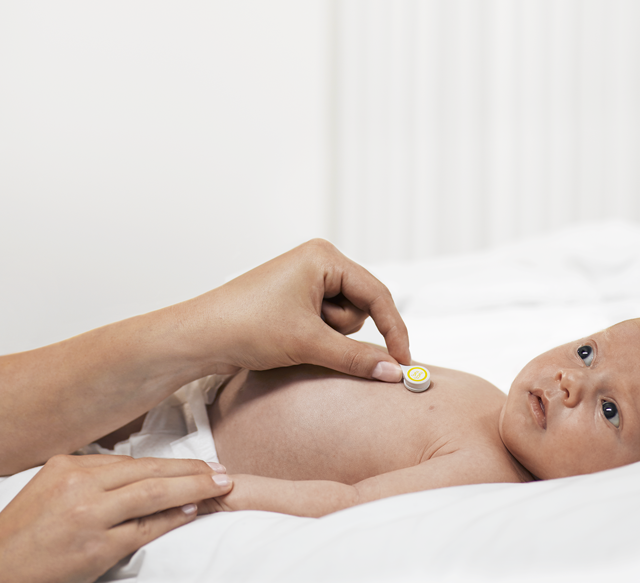
Premature babies in the NICU are fragile and at risk of sudden changes in oxygenation (pO2) and carbon dioxide (pCO2) levels which can cause severe complications.
With transcutaneous monitoring, a sensor is gently applied to the body and continuously measures blood gases diffusing through the skin.
Transcutaneous monitoring in neonates provides a real-time overview of the patient’s often fluctuating oxygenation (tcpO2) and ventilation (tcpCO2) status.
This not only minimizes blood sampling from the fragile neonate, but the continuous information allows you to intervene immediately should any changes in the ventilation or oxygenation status occur.
Transcutaneous monitoring is the method of choice for monitoring non-invasive oxygenation and ventilation status
Video: How transcutaneous oxygen monitoring can detect changes in the neonate's respiratory status
Optimal oxygenation monitoring is critical in the NICU to detect rapid changes in the neonate’s respiratory status.
Due to oxygen imbalance – too much oxygen (hyperoxia) or too little oxygen (hypoxia) – premature babies in the NICU are at increased risk of developing respiratory distress syndrome and other complications such as retinopathy of prematurity (ROP), bronchopulmonary dysplasia (BPD) or periventricular leukomalacia (PVL).
Watch the video of how tcpO2 and SpO2 monitoring will reduce periods of unreliable oxygenation status in the NICU.